A customer sends a photo of a bank transfer, your team glances at it, and the order goes to the packing pile. That glance is where most payment disputes start. The fix isn’t more suspicion — it’s a fixed, five-point check that runs the same way every time, by eye or by an AI agent reading the slip first.
Edited screenshots, a real transfer for the wrong amount, and slips from a different order are the failure modes this check is built to catch.
What to check on every slip
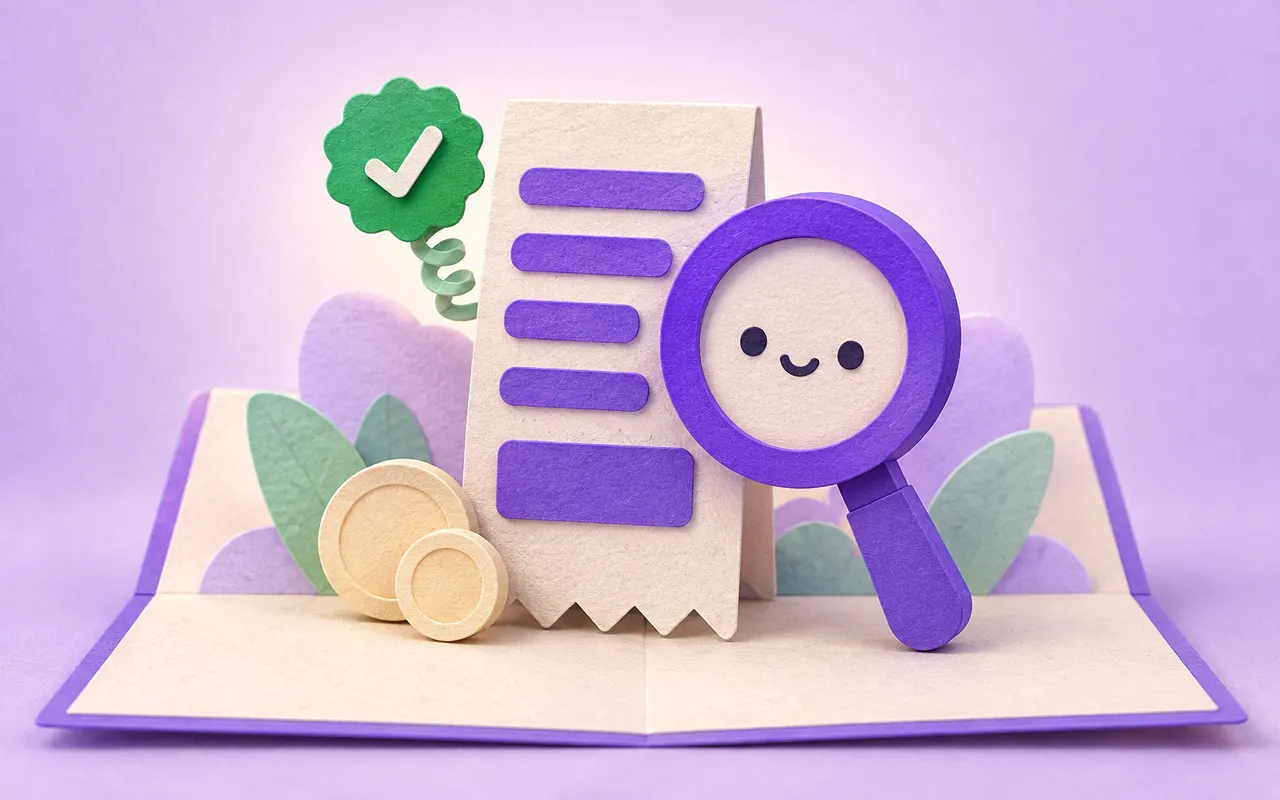
Five details decide whether a slip matches the order, and none of them require special software:
- Receiving account name. It should match your business’s registered account name exactly, not a similar-sounding one.
- Last four digits of the account number, checked against the number on your own bank app or payment page — not against the slip’s claim about itself.
- Amount, matched to the order total to the baht. A transfer for a rounder number than the order (“500” instead of “487”) is one of the most common tells.
- Date and time, which should be recent — same day, or within the window your policy allows for pre-orders and deposits.
- Visual consistency — font, alignment and spacing that match your bank’s real slip layout. Edited slips usually get the numbers right and the surrounding template subtly wrong.
One mismatch is a reason to hold the order, not to argue with the customer. Ask for a clearer photo or the transaction reference number first.
Put the checklist in the chat, not in someone’s head
A checklist only works if every conversation follows it, which is hard to guarantee once more than one person answers chats. Two changes make it stick:
Ask for the full slip in one message. A canned response — “please send the full transfer slip showing the account name, amount, and time” — removes the back-and-forth of a cropped or partial screenshot, which is also the easiest slip to fake convincingly.
Let AI do the first read. An AI agent with image analysis can read a slip’s account name, amount, and timestamp the moment it lands in the inbox, the same way it already reads a photo of a damaged product for a warranty claim. That first read does not confirm the money actually arrived — only your bank statement does that — but it turns a five-detail manual check into a single glance at a pre-filled summary, which is the difference between checking every slip and only checking the ones that look suspicious.
Where a human has to step in
Some cases should never reach “pack it” without a person looking first:
- Any of the five details above don’t match.
- The order is unusually large for that customer’s history.
- It’s a first-time customer placing a high-value order.
- The image is blurry, cropped, or clearly edited in a photo app.
This is the same judgement call an AI agent should make about when to hand off to a human for any question outside its confidence — payment verification is just the highest-stakes version of it. A team already using LINE for internal coordination can route an uncertain slip straight into the group chat where an admin already works, with the AI’s draft read attached, rather than opening a separate dashboard to double-check a photo.
A short SOP your team can run today
- Slip arrives in chat.
- AI agent (or the first available team member) extracts account name, amount, and time.
- Compare those three against the order total and your own account details — not the slip’s claims about itself.
- Match: mark the order paid and move it to packing.
- Mismatch, or anything on the escalation list above: hold the order and loop in a human before replying to the customer.
None of this replaces your bank’s own transaction record, which is the only real confirmation that funds arrived. What it does is stop a five-second glance from being the only thing standing between a fake slip and a shipped order — and it does that without slowing down the vast majority of transfers that are exactly what they claim to be. Teams already running LINE and Facebook orders through one inbox can build this straight into the same workflow, so the check happens where the conversation already is.