A customer messages your LINE OA about an order, waits twenty minutes, then opens your Facebook Page and asks the same question in different words. Nothing links those two threads — LINE, Facebook and Instagram each hand you a contact ID that only means something inside that one app. Two agents open two tabs, see no history, and often give two different answers about the same order.
Why the same customer looks like two people
Every channel keeps its own contact list. A LINE OA sees a userId; a Facebook Page sees a page-scoped ID; Instagram issues yet another one. None of them share a phone number or an order number with each other automatically — that link only exists once a human reads both messages and notices the same name, the same product, or the same complaint. Nothing is broken; it’s just how separate platforms work. The failure isn’t the platforms — it’s not having a rule for what an agent does the moment they spot the overlap.
This gets worse exactly when it matters most: during a live sale, a promotion, or a busy morning, when a customer who feels ignored on one channel is the most likely to try a second one within minutes.
Three signs it’s the same order, not two
Train the team to check for these before answering, not after sending a reply that contradicts what a colleague already said:
- Matching order details in a short window. The same product name, quantity, or order number showing up on two channels within an hour is a stronger signal than a matching customer name, which is common in Thai contact lists.
- The customer says so. “ทักไลน์ไปแล้วนะคะ” or “I already asked on Facebook” is the clearest signal there is — search the other channel by name or order detail before replying, rather than answering as if it’s a fresh question.
- A price or status answer that would contradict what’s already been said. If the draft reply states a price, a stock count, or a delivery date, that’s exactly the kind of answer that looks bad said twice, differently.
One rule: first reply owns the customer
Borrow the ownership rule that already works inside a single channel and extend it across channels: whoever sends the first reply on either channel owns the conversation until it closes, on every channel that customer uses for this order. When a second message turns up somewhere else, the agent who finds it does three things, in order — confirms it’s the same order using the signs above, sends one short redirect on the newer channel, and leaves a note on the first thread so nobody replies there twice either:
“Got your message here too! I’m helping you on LINE already — I’ll reply there so we don’t cross wires. 🙏”
That one line costs less goodwill than a customer who receives two different delivery estimates for the same box.
Make the overlap visible, not just handled
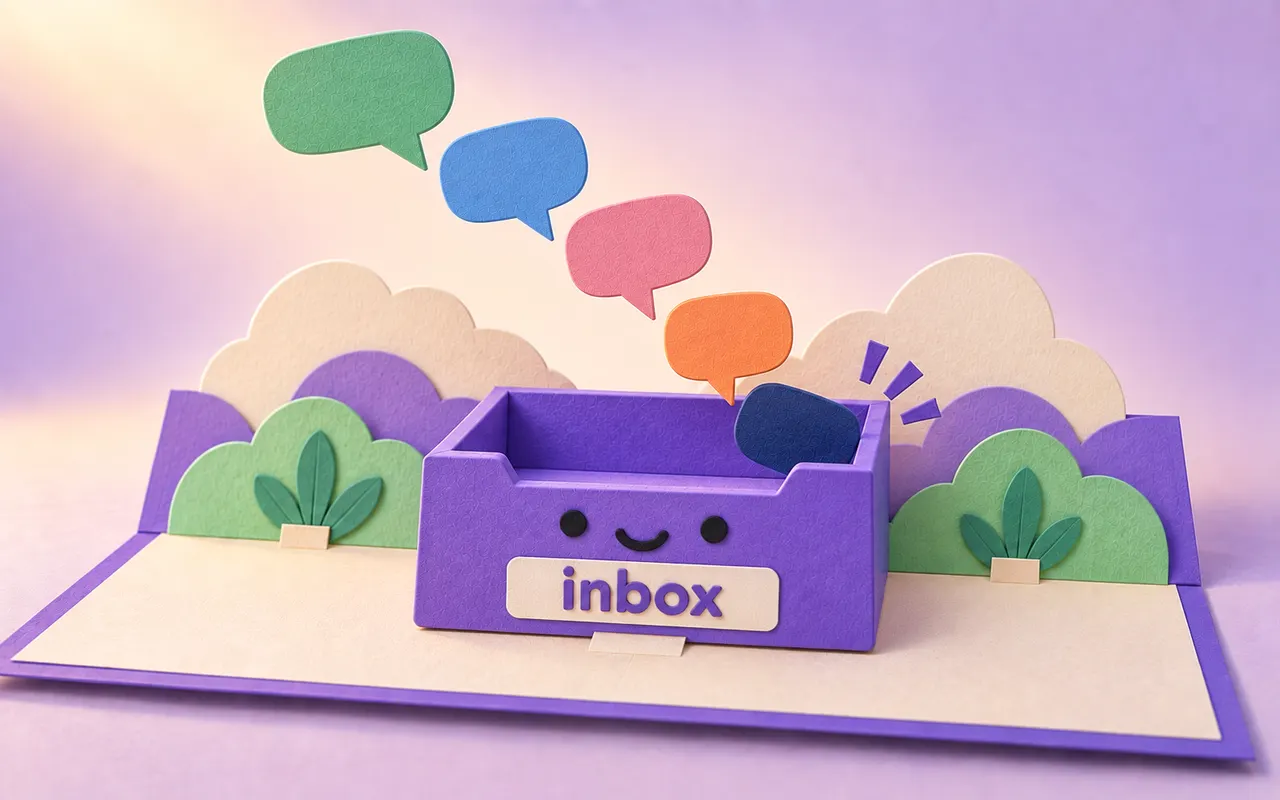
A rule only works if agents can act on it before they’ve already typed a reply. Checking four apps for one name is what makes teams skip the check under pressure. A unified inbox that puts every channel’s messages into one queue is what makes the three signs above checkable in the time it takes to open a conversation — the agent sees the customer’s full history in one place instead of guessing whether a similar-sounding message from an hour ago was the same person. It doesn’t replace the human judgment call of matching two threads to one order; it just puts both threads somewhere the same person can actually see them together.
This same instinct — stop before answering, not after — is the one behind knowing when a chatbot should hand a cart back to a human: a second signal on the same order is a reason to slow down, not a reason to answer faster.
Start with one week’s overlap
Pull a week of conversations and flag every pair where the same customer name or order detail shows up on two channels within a few hours of each other. Most teams find this happens more often than they assumed, concentrated on the busiest days — and that a noticeable share of those pairs got two different replies. That count is the argument for putting the rule in writing rather than trusting it to whoever happens to be online when the second message lands.